Source Inflatable Pool Floats for Pools, Water Parks, and Beaches
Find 30 listings for inflatable pool float products suitable for adults, kids, and commercial use. Compare features like PVC material, customization options, and safety testing standards from verified manufacturers in Guangdong, China.
Key considerations
Products List


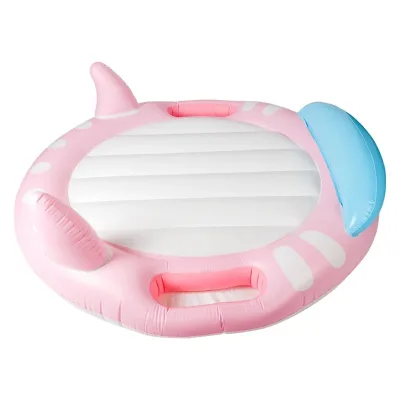
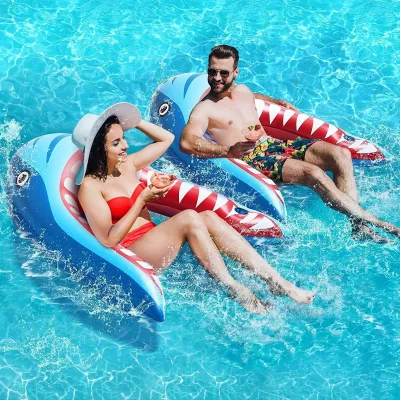
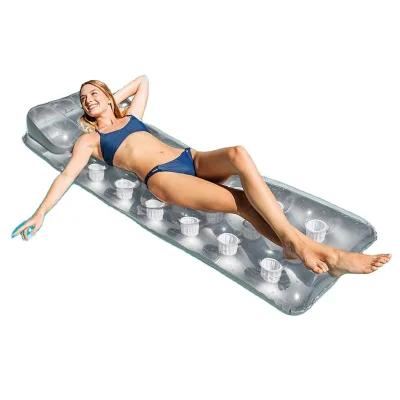


Comprehensive Sourcing Guide
Strategic Sourcing Guide for Inflatable Pool Floats
The global market for recreational water equipment has seen sustained growth, with inflatable pool floats representing a high-volume, seasonal category that demands rigorous procurement discipline. For B2B buyers, sourcing these items requires moving beyond simple aesthetic selection to a comprehensive evaluation of material integrity, safety compliance, and supply chain reliability. The following guide outlines the critical factors for sourcing inflatable pool floats, grounded in observed market data and technical specifications relevant to this product category.
Technical Specifications and Material Integrity
The foundational element of any inflatable pool float is its material composition and dimensional consistency. In the current market, Polyvinyl Chloride (PVC) remains the dominant material due to its balance of durability, flexibility, and cost-effectiveness. Buyers must verify that the PVC used is of a specific grade suitable for prolonged water exposure and UV resistance. The observed product data indicates that high-quality units often undergo rigorous inflation testing to ensure structural integrity before shipment.
Dimensions vary significantly based on the design intent, ranging from compact accessories to large-scale loungers. For instance, specific unicorn-themed models have been observed with dimensions around 9241.537.5 inches, while flamingo designs may measure approximately 595953 inches. Swan-themed floats often feature dimensions near 605643.5 inches. These variations are not arbitrary; they dictate the maximum weight capacity and the intended user demographic. A critical specification to verify is the maximum capacity, which for many standard adult models is observed to be under 100kg. Exceeding this limit poses a significant safety risk and voids warranty claims.
Furthermore, the manufacturing standard for these products often allows for customization. While standard sizes exist, the "Custom size" standard is frequently cited, indicating that suppliers can adjust dimensions to meet specific buyer requirements. This flexibility is a key differentiator in the B2B space, allowing retailers to create exclusive product lines. However, customization introduces complexity in quality control, as the inflation testing protocols must be adapted to the new dimensions to ensure the seams and valves can withstand the internal pressure of the modified shape.
Compliance and Certification Verification
Safety compliance is non-negotiable in the toy and recreational equipment sector. Buyers must demand evidence of third-party testing and certification before placing large orders. The market data highlights several critical certifications that serve as indicators of a supplier's adherence to international safety standards. These include BSCI (Business Social Compliance Initiative), ISO9001 (Quality Management), GSV (Global Standards Verification), and ICTI (International Council of Toy Industries). These certifications suggest that the supplier maintains ethical labor practices and a robust quality management system.
For products intended for children, specific toy safety standards are paramount. The observed data references CPC (Children's Product Certificate), EN71, and ASTM standards. EN71 is a European standard for toy safety, while ASTM represents American standards. The presence of these standards in product descriptions indicates that the manufacturer has conducted tests for flammability, chemical content, and mechanical safety. Buyers should note that while some listings mention "ISOCE," this appears to be a specific or localized certification, and reliance on globally recognized standards like EN71 and ASTM is safer for international distribution.
It is essential to distinguish between general product certifications and specific test results. A supplier may claim ISO9001 certification for their factory, but this does not automatically guarantee that every batch of floats meets EN71-8 or other specific safety norms. Buyers must request the actual test reports for the specific product model they intend to purchase. The data also mentions "24 Hour Inflated Air Testing" and "24 Inflate Testing Before Shipment" as quality control measures. These are operational procedures rather than external certifications, but they are vital indicators of a supplier's internal commitment to quality.
Cost Drivers and Pricing Dynamics
Understanding the cost structure of inflatable pool floats is crucial for maintaining healthy profit margins. The observed price range in the market is extensive, spanning from $1.19 to $14,999. This wide variance is not indicative of quality alone but reflects differences in order volume, customization level, and shipping logistics. The lower end of the spectrum typically corresponds to standard, non-customized units purchased in bulk, while the higher end likely includes large, complex commercial-grade floats or orders with significant branding and packaging requirements.
The Minimum Order Quantity (MOQ) is a primary driver of unit cost. Data shows an MOQ range from 1 to 3000 units. Suppliers with an MOQ of 500 pieces, as seen in specific unicorn float listings, offer a middle ground for mid-sized retailers. However, buyers should be aware that lower MOQs often come with a higher per-unit price due to the fixed costs of setup and production runs. Conversely, orders approaching the 3000-unit threshold may unlock significant volume discounts.
Other cost drivers include the complexity of the design and the packaging requirements. Products featuring "Customized Logo" and "CMYK Printing" incur additional setup and printing costs. The packaging method, whether "Each with Color Box" or bulk "Carton Box" shipping, also impacts the final landed cost. Buyers must factor in the weight and volume of the inflated or deflated product, as shipping costs for bulky items can be substantial. Additionally, the origin of the product, observed as Guangdong, China, influences labor costs and export regulations, which should be included in the total cost of ownership calculation.
Typical Applications and Market Segmentation
Inflatable pool floats serve a diverse range of applications, from residential leisure to commercial entertainment. The market data categorizes these products by "Applicable People," which includes Kids, Adults, Men, Women, Girls, and Boys. This segmentation dictates the design, size, and safety features required. For example, floats designed for the "3-18 Years" age group must adhere to stricter safety guidelines regarding small parts and choking hazards compared to adult-only models.
The "Occasion" field in the data highlights "Commercial" and "Water Park" usage, indicating that a subset of these floats is built for high-traffic, heavy-duty environments. These commercial-grade floats often feature reinforced materials and larger weight capacities to withstand constant use by multiple users. In contrast, "Family Swimming Pool" and "Beach, Lake" applications suggest a focus on portability and ease of storage. The "Function" of these products ranges from simple "Pool Floaties" to "Water Play" accessories, with some designs like "Inflatable Bed Bumpers" serving specific safety or comfort roles for children.
Understanding the target occasion is vital for inventory planning. A retailer focusing on water parks needs to stock durable, high-capacity floats with robust quality control, whereas a seasonal beachwear store might prioritize colorful, lightweight designs with a focus on aesthetic appeal. The "Style" of the product, such as "Shark Theme Series" or "Unicorn," also plays a role in marketing, as themed floats often drive impulse purchases during the summer season.
Supplier Evaluation and Quality Control Protocols
Selecting the right supplier involves a deep dive into their quality control (QC) processes. The observed data emphasizes "24 Hour Inflated Air Testing" and "24 Inflate Testing Before Shipment." These are critical checkpoints that ensure no leaks or structural weaknesses exist before the product leaves the factory. Buyers should verify if these tests are performed on a statistical sample or on 100% of the production run. For high-volume orders, a 100% test is preferable to minimize the risk of receiving defective goods.
The "OEM/ODM" capability is another key evaluation metric. The data confirms that "OEM/ODM: Yes" is available, meaning suppliers can manufacture products based on the buyer's designs or private label existing models. This capability is essential for brands looking to differentiate themselves. Buyers should assess the supplier's ability to handle "Customized Color" and "Customized Logo" requests without compromising the structural integrity of the float.
When evaluating suppliers, look for evidence of a comprehensive quality management system. The presence of ISO9001 certification suggests a systematic approach to quality, but it is the specific QC steps like air testing that protect the buyer from immediate product failure. Additionally, the "Condition" of the product is listed as "New," which is a standard expectation but worth confirming to avoid receiving refurbished or overstock items.
Long-Term Procurement Considerations
Sourcing inflatable pool floats is not a one-time transaction but a relationship that requires long-term planning. The "Customized" nature of many products means that once a design is finalized, the supplier becomes a critical partner in maintaining consistency. Buyers should establish clear communication channels regarding any changes in material standards or safety regulations. The "Standard" for production is often listed as "Custom size," which implies that the buyer and supplier must agree on precise specifications for every order to avoid discrepancies.
Sustainability and environmental regulations are becoming increasingly important in the PVC industry. While the current data does not explicitly mention eco-friendly materials, forward-thinking buyers should inquire about the recyclability of the PVC and the environmental impact of the manufacturing process. Furthermore, the "Packaging" aspect, described as "Each with Color Box" or "Carton Box," should be evaluated for its environmental footprint. Reducing packaging waste can be a significant selling point for eco-conscious retailers.
Finally, buyers must consider the lead time and supply chain resilience. While specific lead times are not provided in the data, the complexity of customization and the seasonal nature of the product suggest that production schedules can be tight. Establishing a buffer stock before the peak season is a prudent strategy. The "Location" of the supplier, Guangdong, China, is a major manufacturing hub, but buyers should be aware of potential logistical delays during peak shipping seasons. Building a diversified supplier base can mitigate these risks and ensure a steady flow of inventory.
Comparative Analysis of Product Attributes
To assist buyers in making informed decisions, the following table summarizes key attributes observed across different product types in the market. This comparison highlights the variability in specifications and helps in matching the right product to the intended application.
| Attribute | Shark Theme Series | Unicorn Pool Float | Pink Flamingo | Adults White Swan |
|---|---|---|---|---|
| Applicable People | Kids, Adult | Adults, Kids | Adults | Adults |
| Max Capacity | <100kg | <100kg | <100kg | <100kg |
| Dimensions (Approx) | Varies | 9241.537.5" | 595953" | 605643.5" |
| Material | PVC | PVC | PVC | PVC |
| Certifications | BSCI, ISO9001, GSV, ICTI | CPC, EN71, ASTM | CPC, EN71, ASTM | CPC, EN71, ASTM |
| Customization | Logo, Size | Logo, Size | Logo, Size | Logo, Size |
| Testing Protocol | 24h Air Test | 24h Inflate Test | 24h Inflate Test | 24h Inflate Test |
| Usage | Pool Accessories | Family Swimming | Family Swimming | Water Play |
This table illustrates that while the core material and testing protocols remain consistent across the category, the dimensions and target demographics vary significantly. Buyers should use this framework to filter suppliers based on their specific product requirements, ensuring that the chosen float aligns with their brand identity and customer expectations. By adhering to these technical and compliance standards, B2B buyers can secure a reliable supply of high-quality inflatable pool floats that meet both safety regulations and market demands.
FAQs
What certifications do these inflatable pool floats have?
These products hold BSCI, ISO9001, GSV, and ICTI certifications. They also meet CPC, EN71, and ASTM safety standards for toys. Some listings mention ISOCE, but global standards are preferred for international distribution.
How much weight can the standard adult pool floats support?
The maximum capacity for many standard adult models is observed to be under 100kg. Exceeding this limit poses a significant safety risk and may void warranty claims. Always verify the specific weight limit for each design.
Can buyers request customized logos and colors for these floats?
Yes, customized logos and colors are available for these products. The supplier supports OEM and ODM services with CMYK printing options. This allows retailers to create exclusive product lines with specific branding requirements.
What material is used to manufacture these inflatable pool floats?
The primary material used is Polyvinyl Chloride (PVC). This material offers a balance of durability, flexibility, and cost-effectiveness suitable for prolonged water exposure. Buyers should verify the specific grade for UV resistance.
How are these products tested before shipment?
Suppliers perform 24-hour inflated air testing and 24-hour inflation testing before shipment. These quality control measures ensure structural integrity and check for leaks. Buyers should confirm if these tests cover 100% of the production run.
What is the typical minimum order quantity for these floats?
The minimum order quantity ranges from 1 to 3000 units depending on the supplier. Specific listings show an MOQ of 500 pieces for certain unicorn designs. Lower MOQs often result in higher per-unit costs due to setup fees.
Where are these inflatable pool floats manufactured?
The products originate from Guangdong, China. This region is a major manufacturing hub for recreational water equipment. Buyers should factor in labor costs and export regulations associated with this specific location.